Brandy
Once Upon a Time in HollywoodBrandy is Cliff Booth’s flat-headed, bent-eared pit bull with a reddish-brown coat and the most enduring loving bond in his life. Acquired from his friend Buster Cooley in exchange for a debt, she becomes the star of a dogfighting circuit that brings Cliff excitement and money at a steep cost to her. When Buster proposes risking Brandy’s undefeated reputation for a final bet, Cliff kills him. The violence ends the partnership and, eventually, the fighting: Brandy remains Cliff’s companion, no longer a wager or a source of winnings.
Identity and Bond
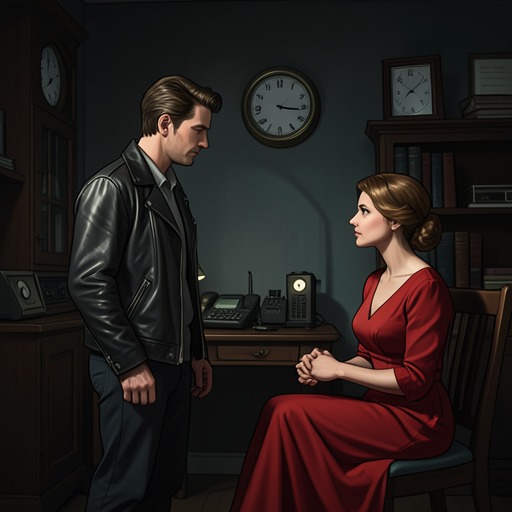
After becoming a widower, Cliff has no further serious relationship with a woman, but he does have Brandy, a female dog who loves him and whom he loves in return. The book presents that attachment through routine as much as declaration. Brandy waits anxiously at the door of Cliff’s trailer for the sound of his Karmann Ghia; when it arrives, she whines, scratches at the door, and wags her short tail. Cliff leaves a small black-and-white television on while he is away so she will not be lonely. His return each evening brings the same exuberant welcome, which he allows to run its course before asking her to settle.
Cliff calls himself a firm-handed caretaker, and Brandy responds to familiar cues. When he points to a chair, she jumps onto the cushion and sits upright to wait for dinner. These gestures make their bond legible as a shared domestic rhythm: she anticipates his return and his commands, while he arranges his day and home around her comfort. The account’s tenderness is especially concrete in the attention he gives her meals and the gifts he brings back.
How Cliff Acquires Brandy
Brandy enters Cliff’s life a little over two years before the events of February 7, 1969. Buster Cooley calls at a time when Cliff is living in a trailer behind the Van Nuys Drive-In. Buster owes him $3,200, accumulated through repeated loans over five or six years. Cliff understands that Buster has been a mooch but not a deliberate chiseler: the money went toward urgent expenses such as keeping a car or television, paying rent, and settling a Union 76 gas-card bill. Rather than humiliate an old friend or provoke an ugly confrontation, Cliff has already mentally written off the debt.
Buster offers something in place of repayment and leads Cliff outside to his Datsun. Brandy is there in a wire-mesh cage in the truck bed, standing on all fours. Cliff is initially skeptical that the dog could be worth the money. Buster nevertheless believes she can win a fight, and Cliff tests her at close range: crouching until his face is level with hers, he holds her gaze. Brandy growls and snaps; the wire prevents her teeth from reaching him. Cliff asks her name, and the dog becomes his.
The Fighting Circuit
Cliff, Buster, and Brandy take her to her first fight in Lomita. Buster’s prediction proves accurate: Brandy kills the other dog in under a minute, and they win $2,400. Cliff finds the fight intensely exciting and is hooked. Over the next six months, they travel the dogfighting circuit across Los Angeles County, Kern County, and the Inland Empire. Brandy fights in Compton, Alhambra, Taft, and Chino, winning every bout, most of them easily. When she is injured, the men give her time to recover.
Success changes the terms of the fights. After Brandy’s first five bouts, her apparent invulnerability draws larger bets and more formidable opponents. The circuit expands to Montebello, Inglewood, Los Gatos, and Bellflower. Brandy continues to win, but the contests last longer and become bloodier; she is hurt more badly and needs more time to recover. Her record, initially the source of Cliff’s excitement and income, becomes a pressure to keep exposing her to harsher opponents.
Buster’s Plan and the End of Fighting
The decisive break comes when Brandy is in no condition to face Augie Doggie, a formidable opponent. Buster argues that she need not win: because she is undefeated, they can enter her in the fight and bet on the other dog. The proposal treats Brandy’s reputation as a financial instrument and her physical danger as part of the scheme. Cliff attacks Buster inside his trailer. They grapple for about four minutes, and Cliff breaks Buster’s neck, killing him.
Cliff remains beside Buster’s body for hours, watching television until roughly two in the morning. After the drive-in closes, he puts the body in the trunk of Buster’s used white 1965 Impala Sport Coupe, bought with Brandy’s winnings. With Brandy in the passenger seat, he drives to Compton and leaves the car there with the keys in the sun visor. He walks with Brandy through the night until daybreak, then they take a bus back to Van Nuys. Cliff hears nothing afterward about Buster or the abandoned car, and no one he knows brings Buster up again.
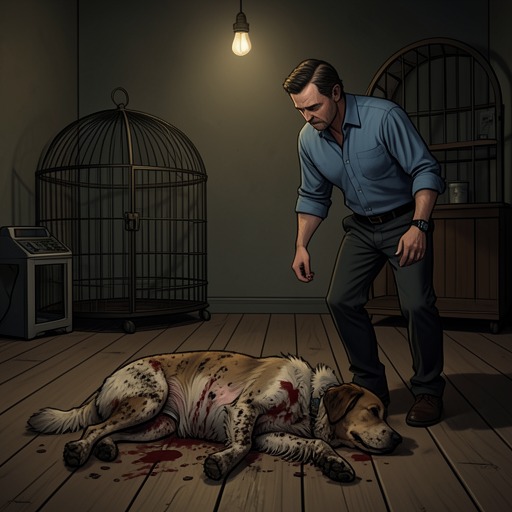
The killing is a turning point in Brandy’s life with Cliff: the dogfighting partnership ends with Buster’s death, not with a final contest. Cliff fights Brandy only twice more, and only when he is badly short of money. After the last of those fights, he promises her that he will never make her fight again. Brandy cannot understand the words, but the narrative makes clear that Cliff intends to keep the promise.
Domestic Life and Significance
On Friday, February 7, 1969, Brandy’s life is shown through the quiet particulars of an evening at home. She sits on a wooden chair beside Cliff’s recliner, using a small dog pillow, and waits while he prepares her dinner. He takes his time despite knowing the delay frustrates her, reasoning that hardship can build character. Before cooking, he opens the refrigerator and takes out a can of Old Chattanooga beer. The television is tuned to KABC Channel 7; a Red Apple cigarette commercial plays on its small screen. Against that routine, Brandy’s place is not that of a performer or prizefighter but of the animal Cliff feeds and keeps company.
A steak bone makes the affection still more visible. After lunch with Rick Dalton at Musso and Frank, Cliff carries the bone home wrapped in a white cloth napkin. Brandy greets him as she does every night, jumping up against him; once she has settled, he unwraps the gift and offers it to her. She catches it in her jaws and retreats to her pillow to gnaw in private. Cliff contrasts her delight with his cynical view of human courtship, but the scene’s force lies in the uncomplicated exchange itself: he remembers her while away, brings her something she values, and takes pleasure in her response.
Brandy’s story sets two forms of dependence beside each other. During the fights, her strength and undefeated record produce money and excitement for the men around her, while the worsening injuries register the cost to her. At home, the same dog is an individual companion with habits, expectations, and a place of her own. Cliff’s decision to stop fighting her does not undo the harm or the earlier exploitation; it changes what he will ask of her. In the end, Brandy’s importance is measured not by her record but by the promise that she will remain beside him without being sent back into the ring.